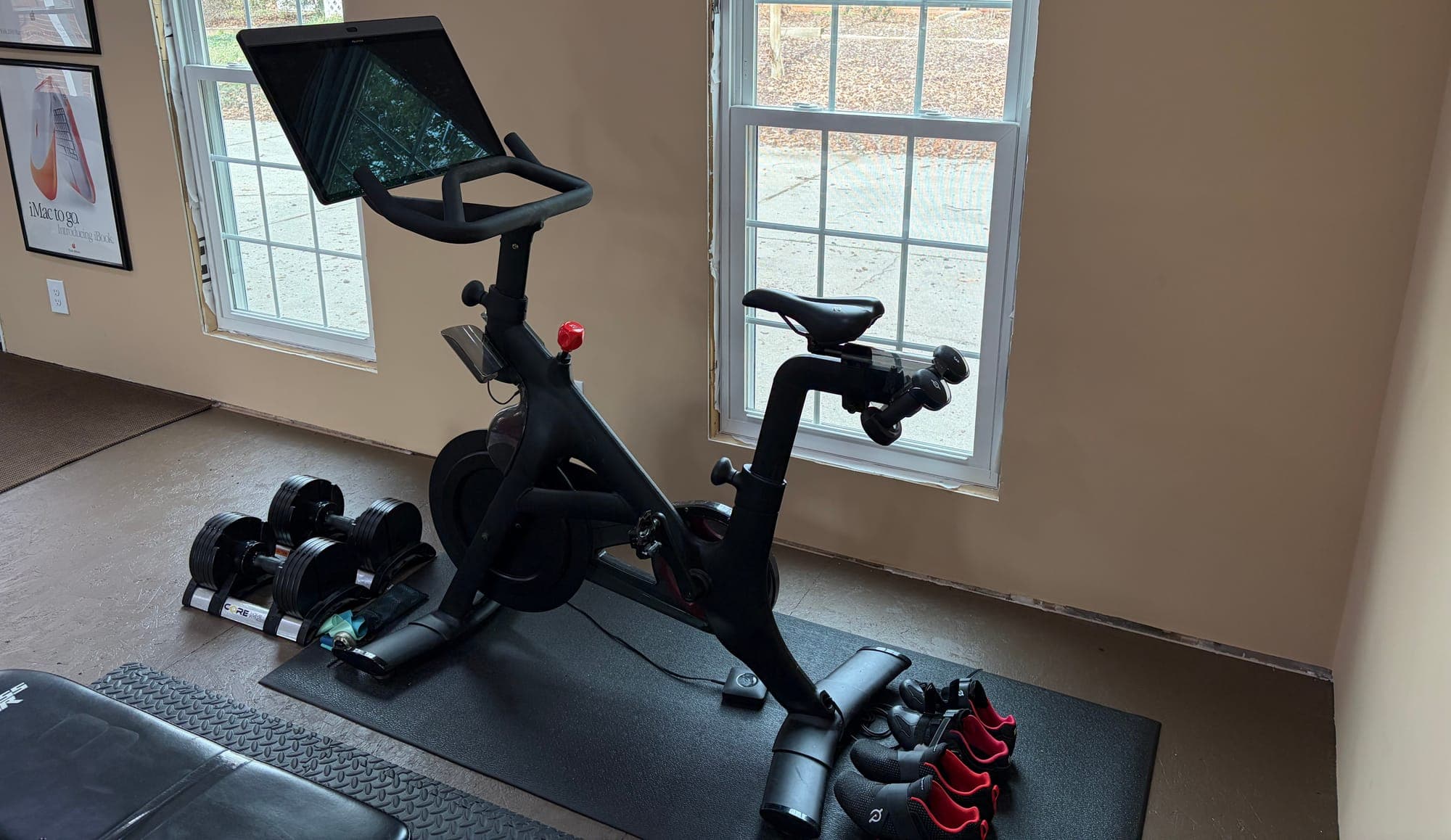
I've been on a Peloton Bike+ for five years and 1,100+ rides. Before that, I rode my parents' Original Bike for two years. So when I tell you which Peloton to buy, it's based on real wear-and-tear data, not specs.
Peloton has split the lineup into two series. Here's what's actually for sale right now:
Cross Training Series (sold new):
Cross Training Bike: $1,695 — basically an Original Bike with a swivel screen added
Cross Training Bike+ with IQ: $2,695 — Original Bike+ with form tracking, a fan, Sonos speakers
Original Series (refurbished only):
I've tested both Original Series bikes for years. I haven't ridden either Cross Training Series bike yet. The five-difference deep dive below covers the two bikes I know cold. I'll cover what I can say about the Cross Training Series toward the end based on the spec sheet, and I'll be upfront when I'm reasoning vs. reporting.
The short version: the refurbished Original Bike at $1,145 is the best deal Peloton sells. The refurbished Original Bike+ at $1,995 is worth the upgrade if you do a lot of off-bike classes or want auto-calibration. Both Cross Training bikes are harder to justify at current prices.
If you're not sure a Peloton makes sense for you in the first place, start with my Is Peloton Worth It? post.
Five Major Differences (Original Bike vs. Original Bike+)
1. Screen
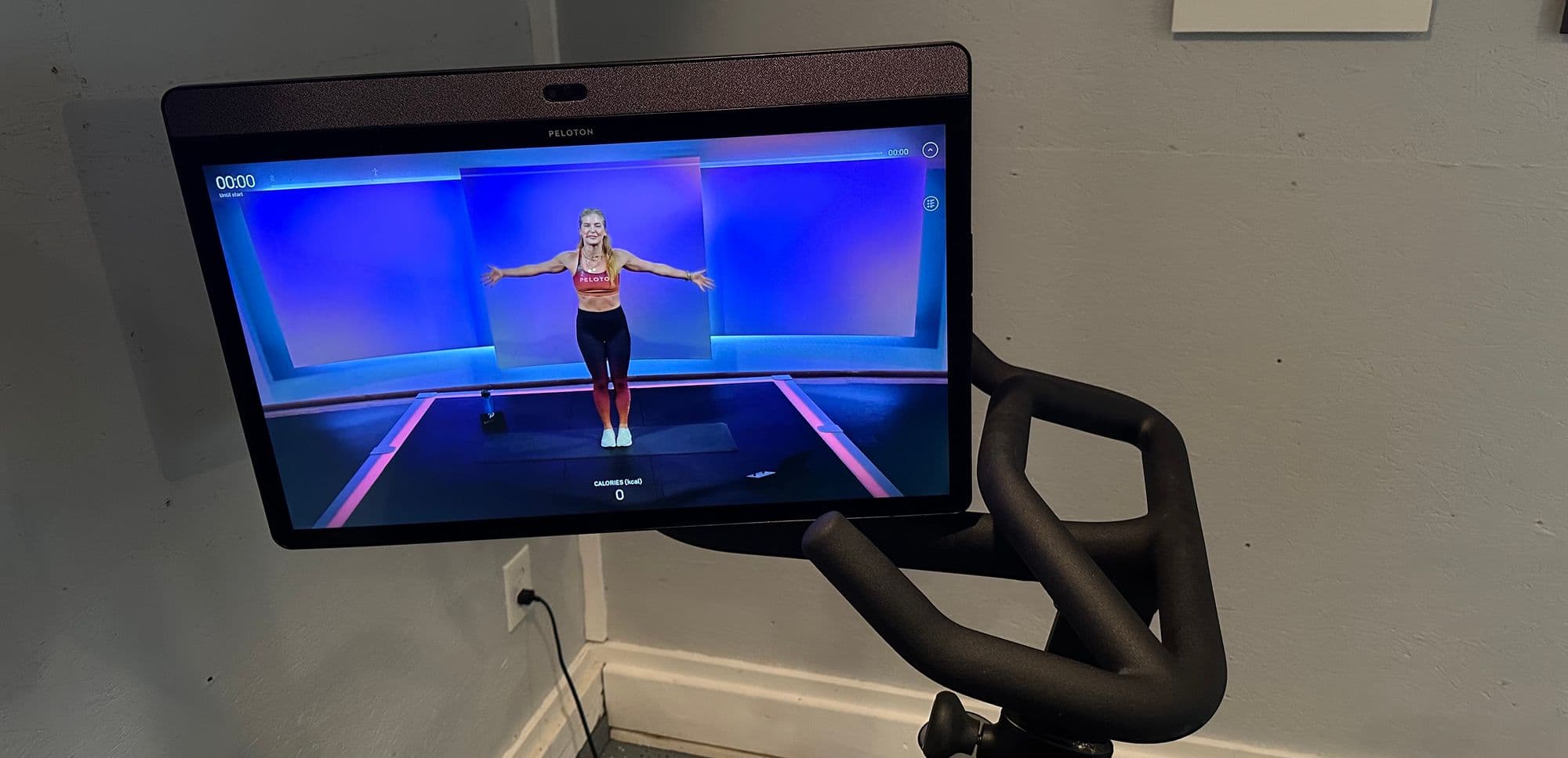
The Bike+ screen is slightly larger at 23.8" compared to 21.5" on the Bike. Honestly, I never noticed the size difference until I went looking for it.
Peloton claims the Bike+ has a reduced-reflective and anti-smudge coating, but I can't tell. It's still a fingerprint magnet and reflective.
The real screen difference is rotation. The Bike+ screen swivels 360 degrees and tilts, which matters if you take Peloton classes off the bike. The screen rotates smoothly and locks at any angle. The Original Bike's screen is fixed.
If you want the rotating-screen experience without paying for it, you've got two workarounds:
Third-party swivel mounts on Amazon. I haven't tried these myself, and they probably void the warranty, but the well-reviewed ones look solid.
Cast from your Peloton or the Peloton phone app to a TV. A 32" TV is $100, which is a lot easier to stomach than the $850 jump from a refurb Bike to a refurb Bike+.
If you plan on doing a ton of off-the-bike classes, the rotating screen is genuinely nice. But it's not worth $850 on its own.
2. Calibration
This is the biggest functional difference between the two bikes, and it's the one most reviews underplay.
The Bike+ has a load sensor and auto-calibrates programmatically. The Original Bike comes calibrated from the factory, then drifts over time and needs manual recalibration. Eventually the manual recalibration stops holding too. My dad's owned his Original Bike for almost eight years and well over a thousand rides, and his calibration is now beyond fixing.
Bad calibration affects two things, and most people only think about the second one.
The class itself. When the instructor calls out a resistance of 50, that number assumes a calibrated bike. If yours has drifted, a "50" might actually feel like a 45 or a 55. You're not riding the class the way the instructor designed it. The fix is mental. After enough rides, you learn what your effort feels like at each level. "Instructor said 50, mine reads light, I'll bump it up by five." Annoying, not a dealbreaker.
The leaderboard. Output scores are calculated from cadence and resistance, so if your resistance is off, your output is off. In theory, if every Original Bike drifted at the same rate, you'd be competing against equally drifted bikes and the leaderboard would still be fair. In practice, calibration goes all over the place. Some bikes barely drift. Others drift hard. Some people never recalibrate, and a few seem to intentionally miscalibrate to juice their numbers.
You can spot it once you know what to look for. Every now and then you'll see a 55-year-old mom putting up output numbers that aren't physically possible. It's not common, but it happens. The leaderboard is never going to be perfectly fair as long as Original Bikes are mixed in.
The only real fix would be a Bike+ only leaderboard filter, where you only see auto-calibrated bikes. Peloton doesn't offer that, but they should. It'd be a great option for competitive riders, and it'd give people a real reason to upgrade.
One thing to know if you're buying a refurbished Original Bike: it's already been ridden, so the calibration may have started drifting before it gets to you. The bike still works fine, but you're starting closer to the drift threshold than someone who bought new. Probably not a big deal given how many rides it takes for serious drift, but it's something to keep in mind. The refurb Bike+ doesn't have this concern because it auto-calibrates regardless of how many miles are on it.
How much should this matter to you? Probably not a ton. If you're using Peloton for motivation and competing mostly against your past self, your output numbers stay internally consistent enough to track progress. If you obsess over the global leaderboard, the Bike+ is the only way to get truly accurate scores. And even then, my dad got over a thousand rides in before his calibration went sideways. Most people won't hit that wall for years.
3. Resistance
The Bike has mechanical resistance. Twist the knob and you're physically moving parts inside the bike. The harder you crank it, the harder the knob is to turn.
The Bike+ has digital resistance. The knob spins endlessly because it's just sending a signal. Small taps make small adjustments. A full spin can swing you 50 points.
The big difference is a feature called Auto-Follow. When the instructor calls a resistance change, the bike adjusts on its own. You can lock it off anytime by tapping the icon on screen.
In theory, Auto-Follow is great. In practice, I find it adds friction. The target metrics aren't always recorded properly, and the resistance change can lag a few seconds. Nothing worse than the instructor saying "crank it to 50" while your bike drops to 30. It throws off the whole interval.
I leave Auto-Follow off and prefer manual control. New riders won't have any trouble learning the mechanical knob either.
4. Apple GymKit
The Bike+ has Apple GymKit support, which was the feature that pushed me toward the Bike+ originally.
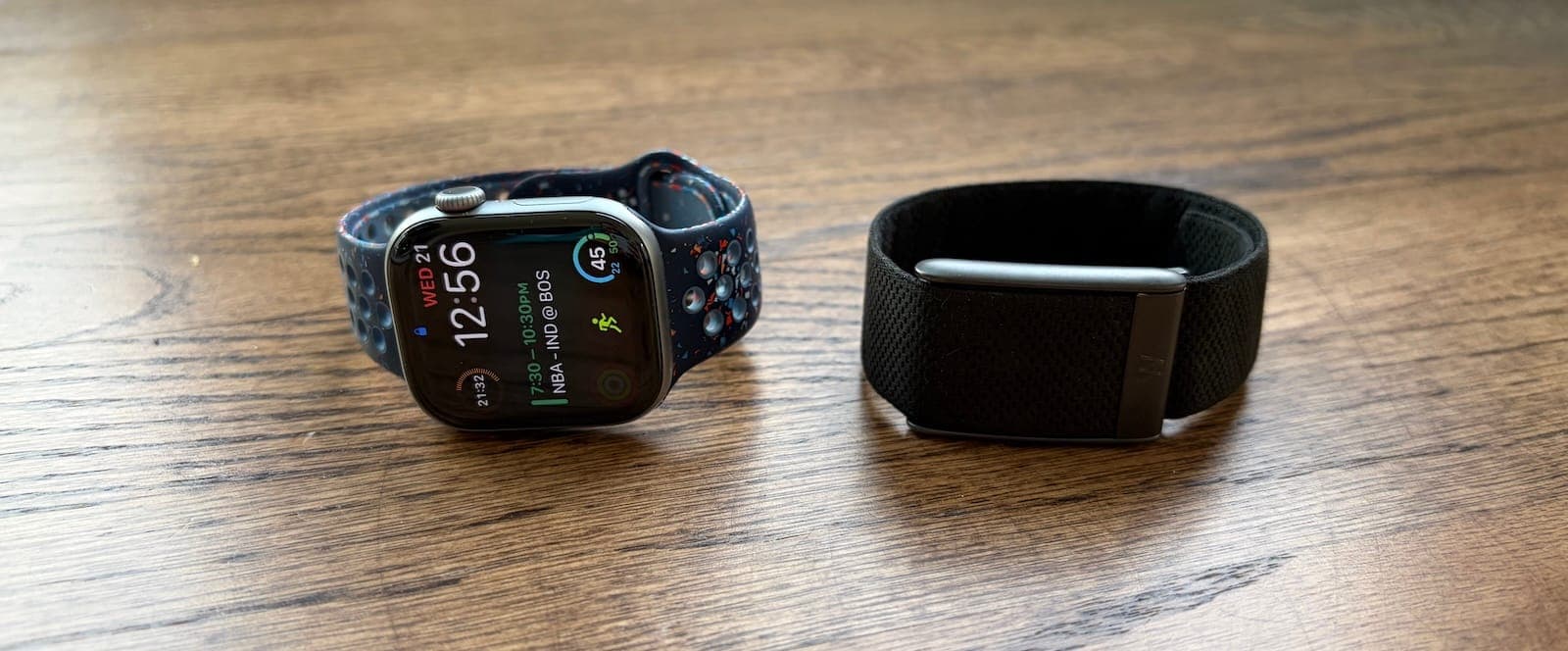
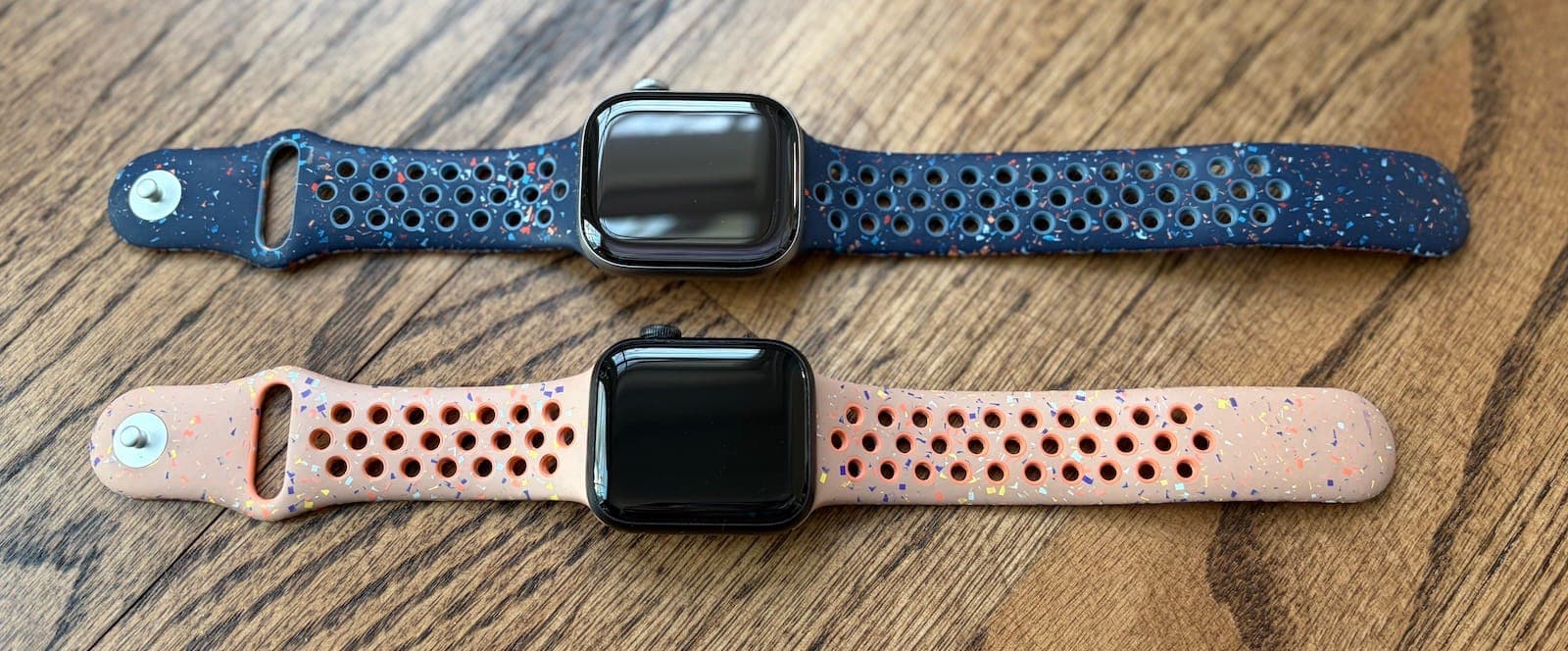
There's an NFC reader at the top of the screen, near the Peloton logo. Tap your Apple Watch to it, approve the connection, and your watch automatically goes into workout mode. Your heart rate displays on the left side of the Peloton screen and Peloton tells you which heart rate zone you're in, which actually matters for power zone rides.
In practice, GymKit works about 80% of the time. Sometimes I tap and nothing happens. Sometimes I get an "Unable to Connect" error. Resetting the Apple Watch fixes it but takes three minutes. Same thing happens with my wife's watch.
I figured out a hack: if I tap "Done" on my previous workout before starting on the Peloton, the connection rate jumps to about 90%. Still annoying when it fails. After five years, it's still not 100%.
GymKit also still only works for cycling. I'd love to tap in for core or strength classes off the bike to get heart rate on screen, but that's never happened.
If you have an Apple Watch and want the Original Bike, just start an indoor cycling workout on the watch and glance down for your heart rate. To get heart rate on the Peloton screen specifically, there are a few options:
A third-party Apple Watch app called BlueHeart can broadcast your heart rate over Bluetooth.
Peloton sells a chest strap for $50.
Any Bluetooth heart rate monitor on Amazon works.
A Whoop strap pairs natively.
GymKit is my favorite Bike+ feature. It's also still not worth $850 on its own.
5. Speakers
The Bike+ has a 4-channel system with 2x3W tweeters and 2x10W woofers. The Original Bike has a 2x10W setup.
The Bike+ sounds better because the speakers sit right above the screen and face you. Bass is deeper. It sounds like a real audio system instead of a tablet.
The Original Bike's speakers are loud enough, just hollower. They're directed away from you, which is the bigger issue.
I rode my parents' Original Bike for two years before buying my own and never had a problem with the sound. If audio quality matters to you, a JBL Charge or Megaboom is around $100 and sounds way better than either bike. Bluetooth or wired headphones work too.
6. Miscellaneous
A handful of smaller Bike+ upgrades:
2x the RAM and a faster processor. Menus open quicker. Doesn't matter once you're in a class.
8MP front camera (up from 5MP) with a privacy cover. The video chat feature is unusable on a screen this small.
USB-C charging port for your phone. I never use it.
Headphone jack moved to the front of the handlebars. Slightly more convenient.
Smoother seat adjustment.
The Original Bike has two small wins of its own:
A metal weight rack instead of plastic. The Bike+ rack feels cheap, though after five years mine still hasn't cracked.
The Bike+ screen bolts loosen over time and need occasional tightening. The Original doesn't have this issue.
What About the Cross Training Series?
I haven't ridden either Cross Training bike yet, so everything below is spec-based reasoning grounded in features I have tested on the Original Series. I'll buy and test these eventually and update the post.
Cross Training Bike ($1,695)
This is essentially the Original Bike with a swivel screen bolted on. Same manual resistance, same calibration drift, same plastic weight rack, same fixed-size screen, no GymKit, no auto-follow. The screen now rotates and tilts, which is the entire upgrade.
The math doesn't work. At $1,695, it's $550 more than the refurbished Original Bike ($1,145). What you're getting for that $550: new condition, full warranty, and a swivel screen. The swivel screen alone isn't worth $550. I have one, I've used it for five years, and I think it's a useful feature for people who do off-bike classes. But it's not a $550 feature.
The bigger problem: at $1,695, you're $300 away from a refurbished Original Bike+ ($1,995). For that extra $300, the Bike+ adds GymKit, auto-calibration, digital resistance with auto-follow, better speakers, and a slightly bigger screen. That's five real upgrades for $300. Compare that to what the Cross Training Bike gives you over the refurb Original ($550 for one feature), and the Cross Training Bike sits in a no-man's-land.
My take: skip it. Either go down to the refurb Original Bike or up to the refurb Original Bike+. The Cross Training Bike is the worst value in the lineup.
Cross Training Bike+ with IQ ($2,695)
This is the new flagship and the most genuinely interesting bike Peloton has made in years. On top of the Bike+ I've been using for five years, it adds:
Sonos-tuned speakers
A redesigned seat
A phone tray
A built-in fan
A camera that tracks your form during off-bike classes and counts reps in real time
The form-tracking camera is the actual reason to consider this. Nothing else on the market does that for indoor cycling, and it could finally make Peloton's off-bike classes feel as guided as the cycling classes. I haven't tested it, so I can't tell you how well it works in practice. The fan and Sonos speakers are nice-to-haves but not category-defining.
At $2,695, it's $700 more than a refurbished Original Bike+. That's a meaningful gap. If form tracking works, the IQ might justify the premium for someone who does a lot of strength and bootcamp classes. If it doesn't work, you've paid $700 for a fan and slightly better speakers.
I plan to buy one and put it through the same long-term testing I've done on the Original Series. Until then, my honest answer is: I don't know yet. If form tracking matters to you, this is probably worth a try. If you're a bike-only rider, the refurb Bike+ at $1,995 is almost certainly the smarter buy.
Get it if / Skip it if
Get the refurbished Original Bike if: This is the best Peloton deal in the lineup. $1,145 gets you 90% of the experience for less than half the price of the IQ. The fixed screen is fine for cycling. Manual resistance is fine. Calibration drift is real but takes years of riding to become a problem.
Get the refurbished Original Bike+ if: You take a lot of off-bike classes (rotating screen earns its keep), you have an Apple Watch and want GymKit heart rate on screen, or you care about long-term calibration accuracy and global leaderboard placement. The $850 jump over the refurb Original Bike isn't critical, but it's a real upgrade. At $1,995 it's a fair price.
Get the Cross Training Bike+ with IQ if (untested): You specifically want the form-tracking camera for off-bike classes. That's the only feature you can't get on a refurb Bike+. The fan and Sonos speakers are nice but not $700 nice over the refurb Bike+. I haven't tested this myself yet.
Skip the Cross Training Bike at $1,695: This is the worst spot in the lineup. Either go down to the $1,145 refurb Original Bike or up to the $1,995 refurb Bike+. The Bike+ adds five real features for $300. The Cross Training Bike adds one feature for $550. Pick one of the other two.
I love my Bike+ and I'm happy I bought it five years ago, but I think most people would be happy with a refurbished Original Bike for $1,400 less than I paid.